
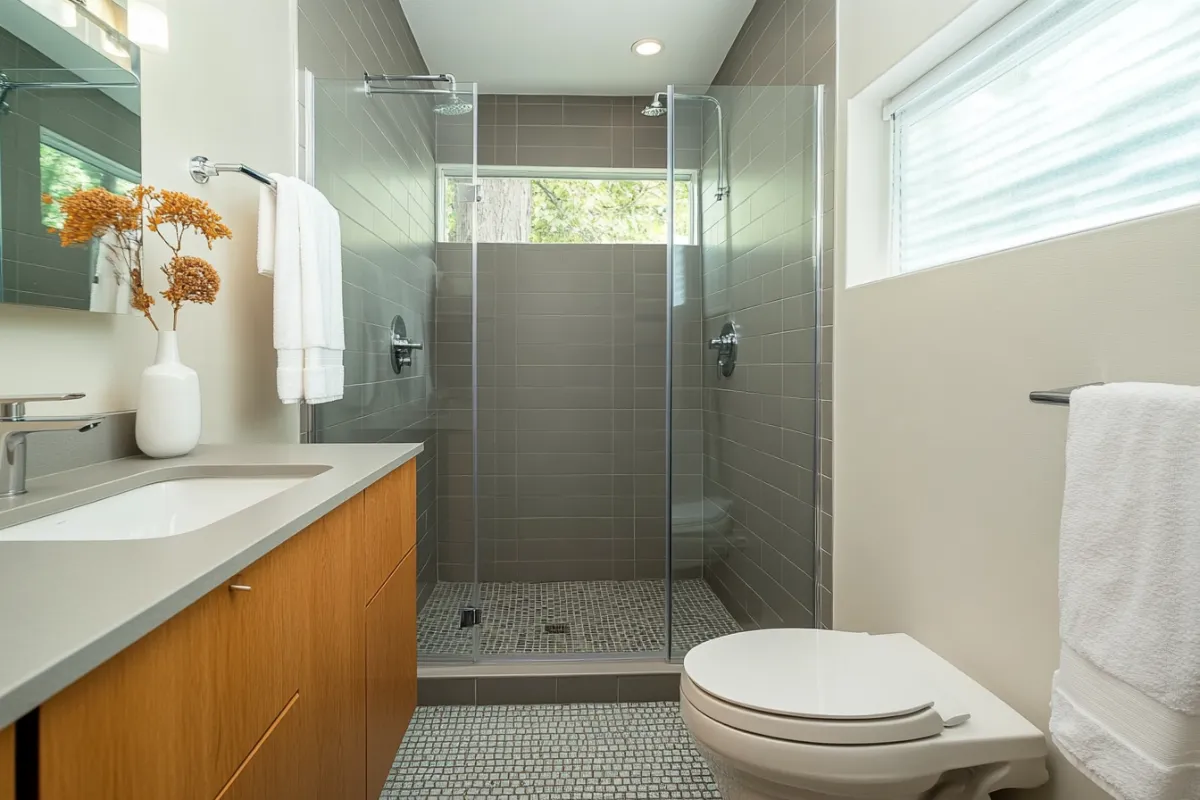
A lot of tubs never get a bath. They get used as a shower with a high wall to climb over, a curtain that clings, and a bottom that's slippery when wet. For anyone with stiff knees or a bad hip, that step over the edge is the riskiest moment of the day. Swapping the tub for a walk-in shower is one of the most practical changes you can make to a bathroom, and it doesn't require tearing out the vanity, the toilet or the floor across the whole room. We do plenty of these in Rohnert Park, where many homes still have their original five-foot tub alcove, and in Cloverdale, where more and more homeowners are planning to stay put as they get older. The tub space is usually more than enough room for a comfortable shower.
Free Estimate
Rather talk? Call (707) 873-7591
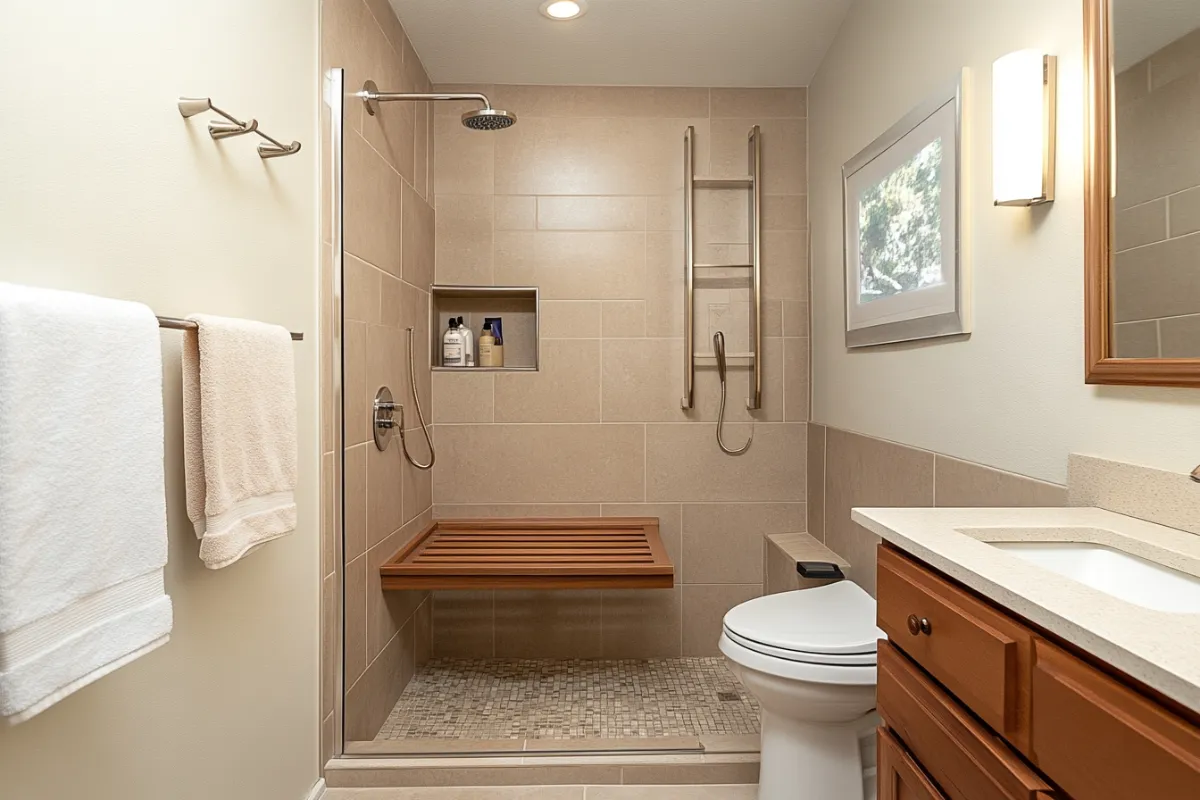
What follows: the signs a conversion makes sense, what's behind the tub and what has to change, how the job runs, and how a conversion compares to a new tub or a walk-in tub. If you want a bigger or more custom shower than the old tub space allows, our shower remodels and walk-in showers page covers the full range.
When a Conversion Makes Sense
The clearest sign is simple: nobody in the house takes baths. If the tub is just an awkward shower, you're giving up room and comfort for something you don't use. Another sign is the step. When getting over the tub wall takes a hand on the wall or a grab of the towel bar, it's time to take the edge away. Damage is a third reason. A chipped or cracked tub, a tub that's been refinished more than once, or tile around it that keeps cracking at the bottom row all point to a surround that's near the end anyway. The last thing to think about is the rest of the house. If you have another bathroom with a tub, or no kids who need baths, converting this one costs you nothing you'll miss. If it's the last tub in the house, we'll talk through that before you decide.
What's Inside a Tub Alcove, and What Changes
A standard tub is 60 inches long, and the alcove it sits in runs between 30 and 32 inches front to back, with walls on three sides. When the tub comes out, a few things behind it have to change. The drain is the big one. The old tub drained at one end, tight to the wall and just above the subfloor. A shower drain needs to be in the floor, usually toward the center or along one edge with a linear drain, so the drain line underneath gets cut and rerouted. If there's a crawlspace, the plumber works from underneath. On a slab, a section of concrete gets opened. The shower valve usually gets replaced too. Older tub valves often lack modern anti-scald protection, and the shower head may move higher for a standing shower. The walls around the old tub get opened, checked for water damage and rebuilt with backer board and full waterproofing that runs down to the new shower floor.
How a Tub-to-Shower Conversion Runs
First, the vanity, toilet and floor get covered, since they usually stay. The old tub comes out, along with the tile or surround around it, and we look at the framing and subfloor underneath. That's where hidden leaks tend to show up, so we deal with any damage before going further. Then the plumber moves the drain and installs the new valve, and the rough work gets inspected. Next we build the shower floor with a slope toward the drain, add the curb or set the floor for a low-threshold entry, and waterproof the whole area as one continuous layer. A built-in niche or bench goes in at this stage if you want one. After an overnight flood test, the tile goes on, followed by grout, fixtures and trim. The glass goes in last, measured off the finished tile. Because the rest of the room stays in place, a conversion is much shorter than a full remodel.
Conversion, New Tub or Walk-In Tub?
There are three common ways to fix a tired tub. The first is replacing it with a new tub and surround. That makes sense if someone in the house actually takes baths, or if you want to keep one in the house for resale or for small kids. The second is a walk-in tub, which has a door in the side and a built-in seat. It helps people who want to soak but can't climb in safely, but you have to sit inside while it fills and drains, and it takes a bigger water heater to fill one quickly. The third is a conversion to a walk-in shower, which is the simplest to use every day and the easiest to keep clean. For most homeowners who mainly shower, the conversion is the better fit. If you're on the fence, tell us how the bathroom gets used and we'll help you choose.
If the tub is only one of the room's problems, our bathroom remodeling page walks through a complete remodel.
Common Questions
Then it's worth a little more thought. Many buyers, especially families with young kids, look for at least one tub, so a house with none can narrow the pool when you sell. If you're planning to stay for years and nobody takes baths, a walk-in shower tends to suit daily life better. Some homeowners split the difference by adding a tub in another bathroom later.
In most cases, yes. Moving the drain and replacing the shower valve count as plumbing work, and that's the part building departments want to inspect. Swapping a tub for a new tub on the same drain is a different and smaller project. We figure out which department covers your address, whether that's your city or Permit Sonoma, and handle the filing either way.
Yes, and that's the best time to do it. With the walls open, we can add solid wood blocking behind the tile wherever you might want a grab bar, now or later, so each one anchors into wood instead of drywall. A built-in bench or a fold-down seat can go in too. Our accessible bathrooms page covers the options.