
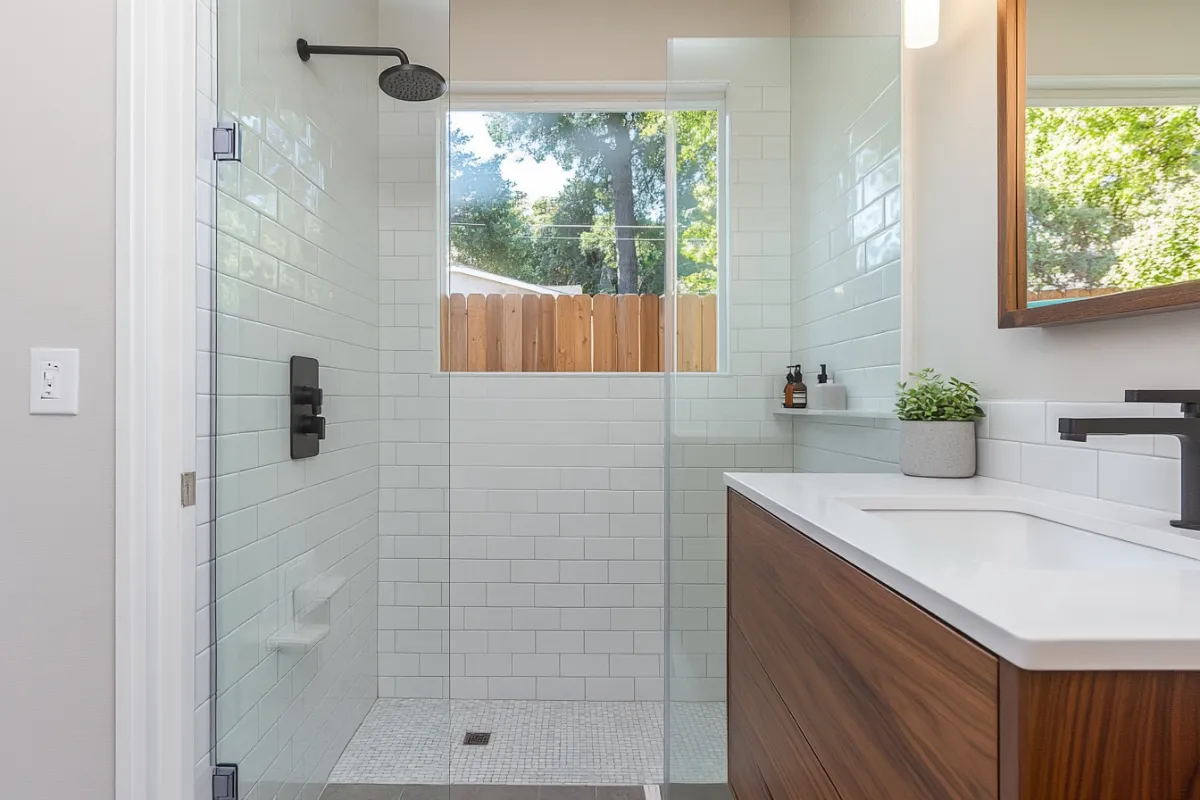
Santa Rosa is big enough that its bathrooms come in every age and style. Near the junior college, older homes from the 1920s through the 1940s often have one small bathroom that's been redone three or four times, each time over the last. Montgomery Village and the streets around it filled in during the 1950s, and a lot of those ranch houses still have their original tile, a recessed tub and a tiny window over it. Bennett Valley and Rincon Valley came later, with bigger houses and the fiberglass tub surrounds that were standard at the time, many of them now cracking at the base. Then there are the neighborhoods rebuilt after the 2017 fires, where the homes are new but some owners want to swap builder-grade bathrooms for something they actually chose. Downtown condos and older apartments converted to ownership have their own limits, like shared walls and building rules about noise and work times.
Free Estimate
Rather talk? Call (707) 873-7591
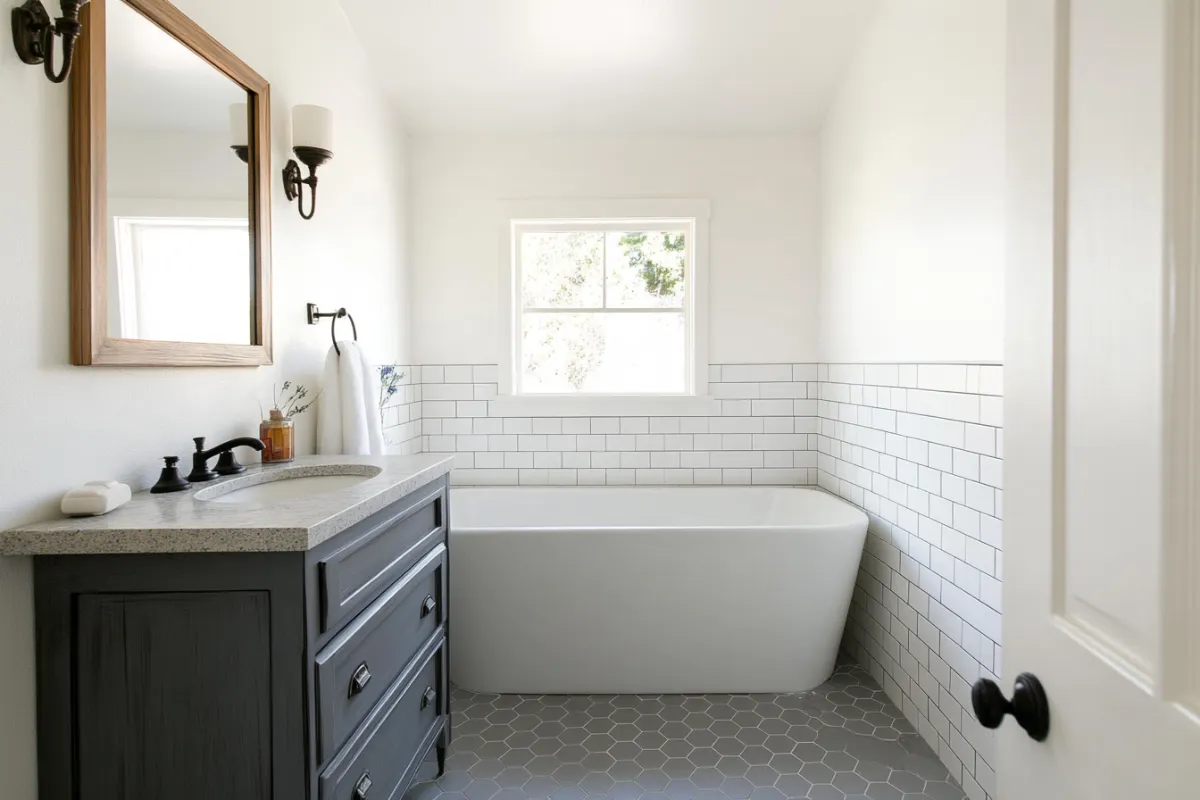
With that much range, there isn't one standard Santa Rosa bathroom job. Sometimes it's a complete bathroom remodel in a room nobody has touched in 60 years. Sometimes it's only the shower. Santa Rosa homeowners also tend to ask for the same few upgrades: a second sink in the primary bath, a shower big enough to turn around in without bumping an elbow, and a fan that actually clears the mirror. Either way, we start in the room itself, looking at what's there before we talk about tile or fixtures, and you get a written price before anything is torn out. Call or send the form, and we'll set up a time to come by.
Ranch Homes in Montgomery Village and Beyond
The ranch houses that make up so much of Santa Rosa were built quickly and built simply, and their bathrooms show their age in predictable ways. The tub sits in a five-foot alcove with tile walls floated on a thick bed of mortar, and after 70 years that bed is often cracking behind the tile. Galvanized supply pipe, which corrodes from the inside, is still common and shows up as low pressure or rusty water first thing in the morning. Ventilation is usually a small window and nothing else. Many of these bathrooms also have a single outlet by the sink with no ground fault protection, which a permitted remodel has to fix, and adding a second circuit while the walls are open keeps a hair dryer and a space heater from tripping the breaker on cold mornings. The upside is that most of these homes sit on raised foundations, so the plumber can reach the drains from the crawlspace. That makes moving a drain or putting a walk-in shower where the tub was a more straightforward job than it would be on a slab. Ranch homes from the same years in Rohnert Park usually come with the same problems and get the same fixes.
Newer Homes, Rebuilt Homes and County Pockets
Not every Santa Rosa bathroom is old. Homes in Fountaingrove, Coffey Park and other areas that burned in 2017 have modern plumbing and wiring, so the work there is about upgrading finishes and layout, not fixing failures. Fewer surprises behind the walls means the schedule holds and the budget goes into the parts you'll see, like where the shower glass goes, whether the toilet gets its own small room, and how much light falls on the mirror. Common requests are replacing a standard tub with a larger tiled shower, adding a second sink, and choosing tile with more character than what the builder picked. Permits work differently depending on the address. Homes inside city limits go through Santa Rosa's Building Division. Some neighborhoods with a Santa Rosa mailing address, like parts of Larkfield and Wikiup, are outside the city and go through Permit Sonoma instead. We check which one covers your home at the estimate and handle the filing. Homeowners just north in Windsor are in a similar spot, with many houses that are solid but due for a refresh.