
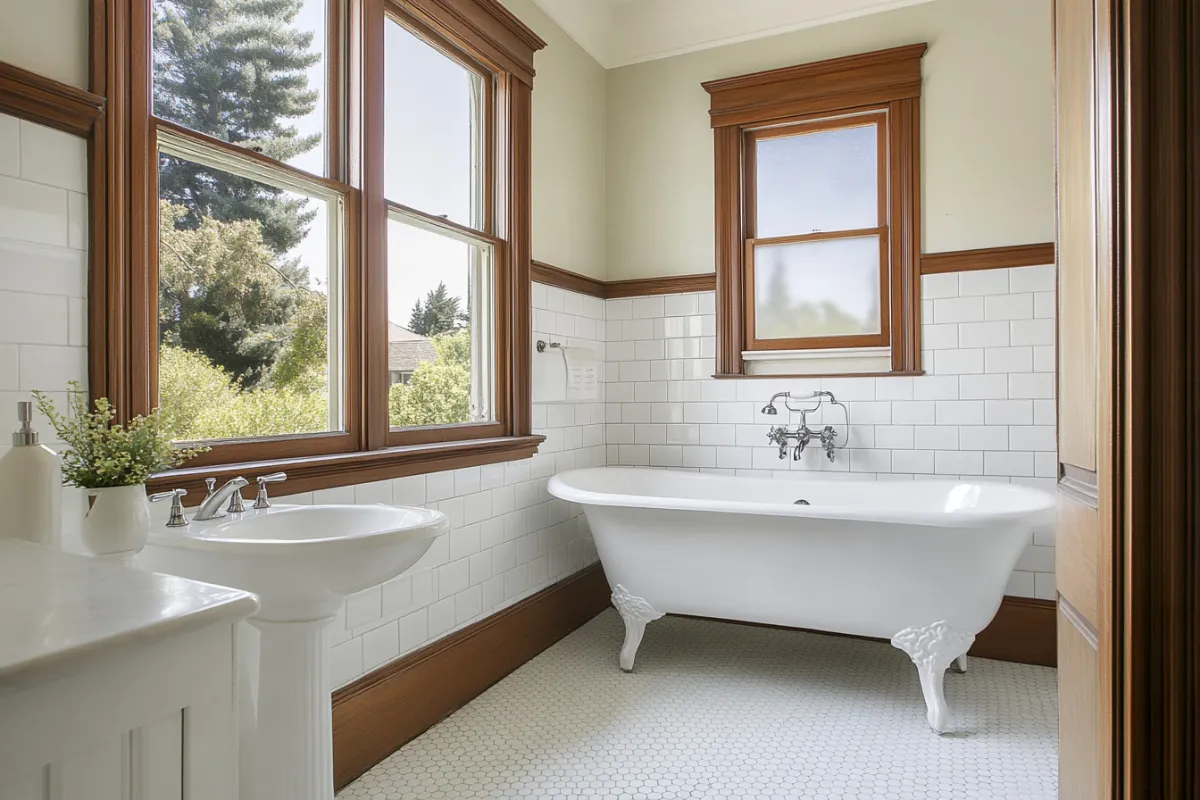
Petaluma came through the 1906 earthquake in better shape than most of the Bay Area, which is a big part of why so many of its Victorian and early 1900s homes are still standing on the west side. Those houses are beautiful, but their bathrooms were almost always an afterthought. Many were carved out of a bedroom corner or a back porch decades after the house was built. The floors slope, the walls aren't square, and the plumbing has been patched by several generations of owners. On the east side of the Petaluma River and across Highway 101, the housing is mostly from the 1960s on, with tract homes and later subdivisions whose bathrooms are simpler but tired: fiberglass surrounds, laminate vanities and fans that don't vent outside. Downtown condos near the river add a third type, with shared walls and association rules on when crews can work. And everywhere in town, the afternoon wind and fog that funnel through the Petaluma Gap keep bathrooms damp longer than you'd expect.
Free Estimate
Rather talk? Call (707) 873-7591
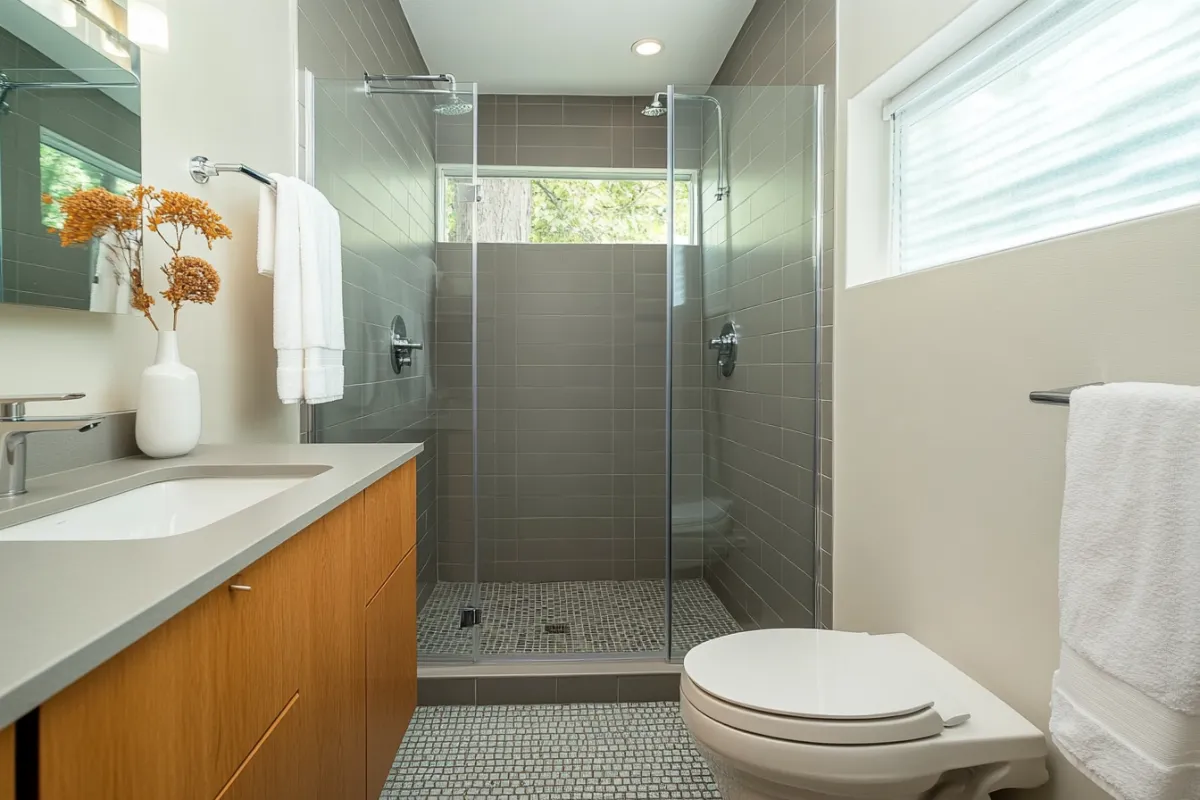
Those two halves of town need different plans. In a west side house, we start by checking the framing and leveling the floor, then decide how much of the old character to keep. On the east side, the work is more often a clean update with better waterproofing, new tile or converting the tub into a shower. West side owners often want to keep a clawfoot tub or a period window, and east side owners usually want more storage and a shower that's easier to clean. We plan around whichever matters to you. Either way, you'll see what we found and get a written price before any work begins. Give us a call to set up a visit.
Bathrooms in Petaluma's Older Homes
Remodeling a bathroom in a house over a hundred years old takes patience. Once the walls open, we often find lath and plaster instead of drywall, cast-iron drain lines, galvanized pipe and sometimes old wiring that has to be replaced before inspection. Floors are rarely level, and a shower floor has to slope the right way to drain, so we flatten and stiffen the subfloor first. Many owners want the room to feel like it belongs in the house, which can mean hex or subway tile, a pedestal or console sink and a clawfoot tub kept and refinished. We can work with that and still build a modern waterproof shower behind it. If your home sits in one of Petaluma's historic districts, changes to the outside, like a new window, may need city review, while interior work usually just needs a standard permit. Old houses also tend to have tight doorways and narrow stairs, so we measure the path for a new vanity or shower pan before anything gets ordered. We go deeper on uneven floors and period tile on our bathroom tile installation page.
East Side Homes and Everyday Updates
East of the river, most bathroom projects are about bringing a sound but dated room up to date. The hall bath usually has a fiberglass tub and shower combo, a builder-grade vanity and a vinyl floor that's starting to lift near the toilet. The primary bath is often small, with a narrow stall shower that's hard to keep clean. Common jobs here are replacing the tub with a tiled walk-in shower, adding a properly ducted fan on a humidity sensor, and putting in a floor that won't curl at the edges. Because these homes are newer, the surprises behind the walls tend to be smaller, which keeps projects on schedule. Many also have a second, smaller bathroom off the primary bedroom that nobody has updated, and doing both rooms in one project usually saves time and setup compared to doing them a year apart. Petaluma's building division issues the permits for addresses inside city limits, and we handle the application and inspections. Families who've moved from Petaluma up to Cotati often find the same 1970s and 1980s bathrooms waiting for them.