
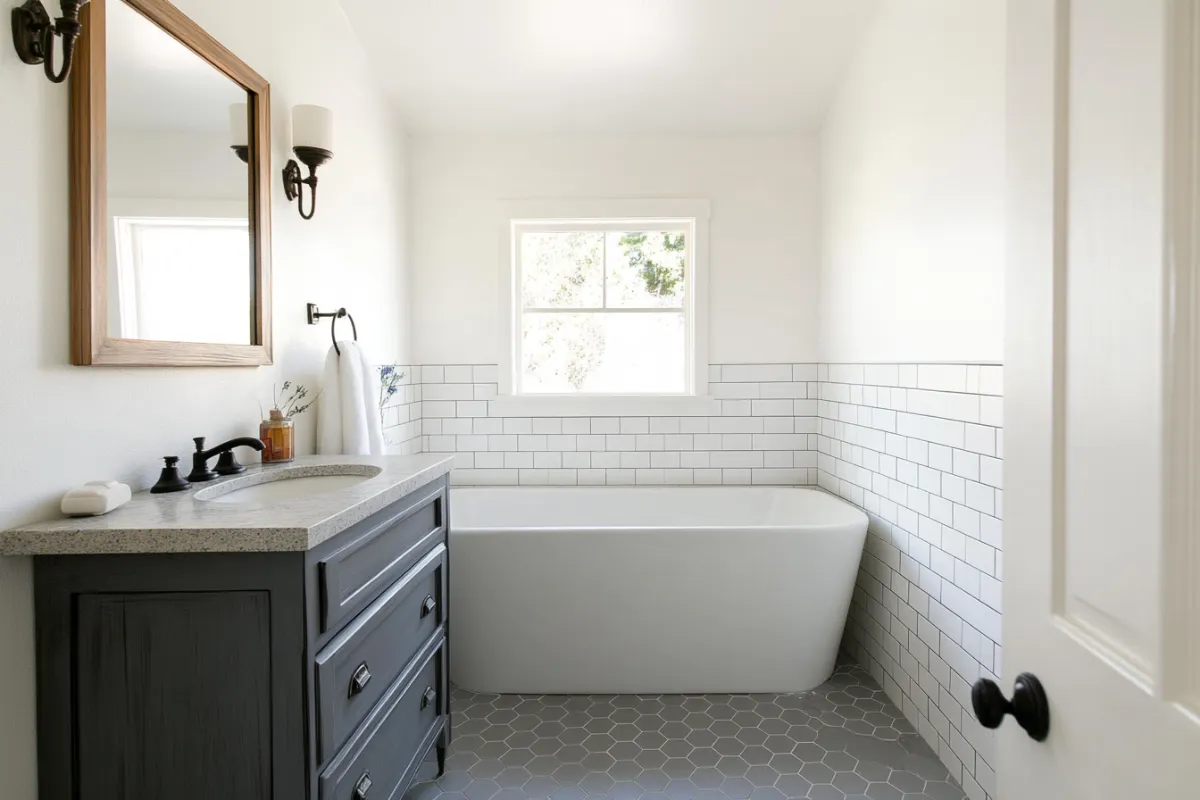
Bathrooms wear out from the inside. The tile can still look decent while the shower pan underneath has been seeping for years, and the first sign is often a stain on the hallway ceiling or a soft spot by the toilet. Steam does its own slow damage. Every hot shower pushes moisture into the drywall, and a fan that only rattles leaves it there. That's why a complete remodel isn't really about new finishes. It's about rebuilding the parts that keep water where it belongs. We do a lot of this work in Cotati, where plenty of the houses still have their first bathroom, and across Santa Rosa's older neighborhoods, where a 1960s hall bath has usually been patched more than once. A full remodel lets us fix the floor, the pipes, the wiring and the shower in one go.
Free Estimate
Rather talk? Call (707) 873-7591
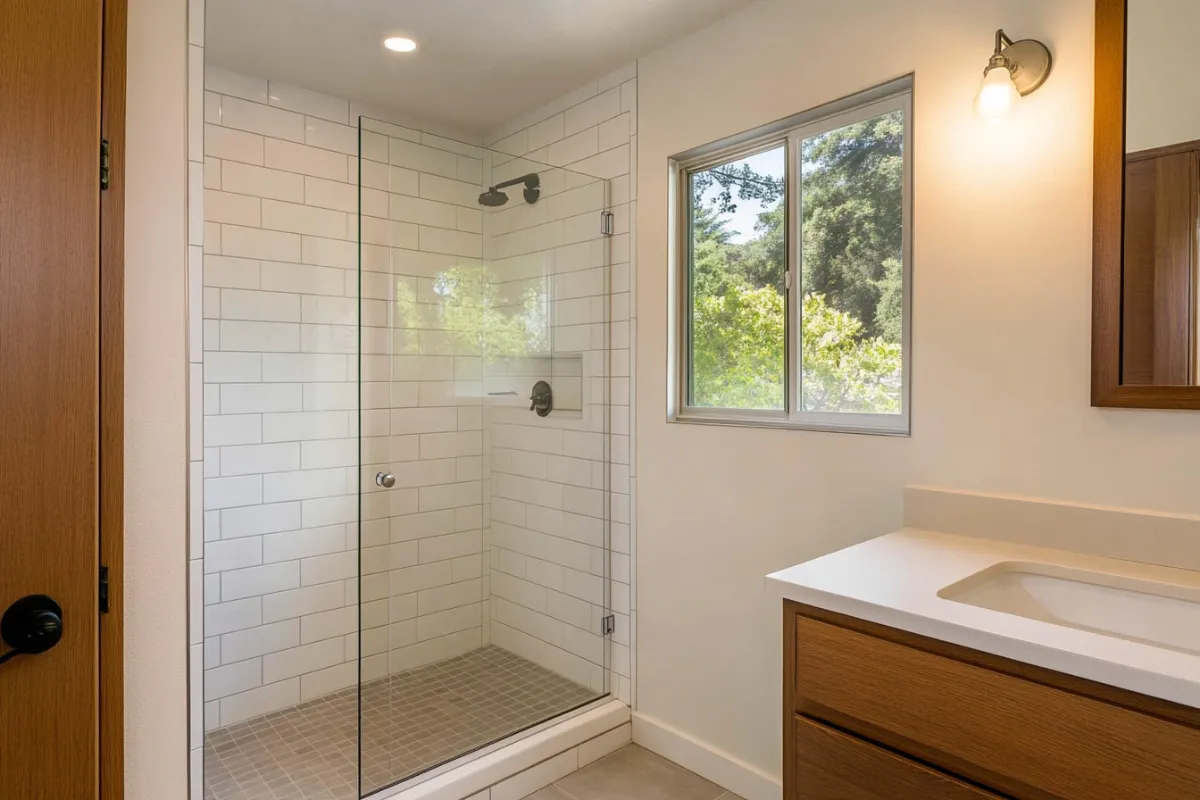
Covered here: the signs a bathroom is past patching, how a shower pan is built and why the old ones fail, the order a remodel runs in, and how to decide whether you need the whole room redone. Sometimes the tub alone is the problem, and a tub-to-shower conversion fixes most of what bothers you.
When a Bathroom Is Past Patching
Some things you can live with. Others tell you the room is failing. Start at the floor. If the vinyl is lifting at the seams or a tile near the tub cracks again after it's replaced, the subfloor is probably moving or wet. Look at the bottom of the door casing and the baseboard next to the shower. Swelling or black staining there usually means water has been getting out of the shower for a long time. Grout that keeps crumbling out of the same joints is a sign the tile has lost its bond. On the walls, paint that bubbles above the shower and a mirror that stays fogged long after you're done both point to poor ventilation. Then check under the sink. A slow drip in the cabinet, rusted shutoff valves or a drain held together with putty means the plumbing is due. When three or four of these show up together, patching one of them just moves the problem.
How a Shower Pan Is Built, and Why Old Ones Fail
The shower pan is the waterproof layer under the floor tile, and it's the part of a bathroom most likely to fail. For decades, California showers were built with a hot mop pan: layers of felt and hot asphalt mopped into the shower floor, with a mortar bed and tile on top. When it's new, it works. After 40 or 50 years, the asphalt gets brittle and cracks, especially at the corners and around the drain, and the water that soaks through the grout ends up in the framing instead of the drain. Today we build pans differently. The floor gets a quarter inch of fall for every foot of distance to the drain, so water never sits. Then a waterproof membrane goes over the mortar bed and runs up the walls, bonded right under the tile, so very little water ever reaches the grout layer at all. Every seam and corner is lapped and sealed. Before any tile goes down, we fill the pan with water and leave it overnight. If the level drops, we find out then, not five years from now.
The Order a Full Remodel Runs In
Day one is protection. We lay down floor covering from the entry to the bathroom and seal the doorway with plastic so dust stays in one room. Then comes demolition, down to the studs and subfloor, and a close look at what's there. Rotted framing or subfloor gets replaced before anything else happens. Next is the rough-in: drain and supply lines, the shower valve, wiring for lights and outlets, and a fan ducted to the outside. The building inspector checks that work while the walls are still open. After the rough inspection passes, we hang backer board, build and waterproof the shower, run the flood test, then set tile. The vanity, toilet, fixtures and lights go in after the grout cures. Paint and trim come next, glass is measured and installed last, and the final inspection closes out the permit.
Do You Need the Whole Room Redone?
A full remodel isn't always the answer, and we'll say so. When the subfloor is sound, the pipes were replaced at some point, and what bugs you is a dated vanity or a tired shower surround, a focused project gets you most of the benefit for much less. Swapping the vanity, toilet and lighting can make a room feel new in a few days. Converting the tub is another common middle ground. The full remodel makes sense when there's water damage you can see or feel, when the plumbing or wiring is original to a house built in the 1950s or 1960s, or when you want to move the shower, toilet or sink. The one thing we won't do is put new tile over a shower pan that's already leaking. That job looks good for a year or two and then fails the same way. At the estimate you'll hear which category your bathroom falls in, and the reasons behind it.
If new tile is the main thing on your list, our bathroom tile installation page covers materials, layout and what goes underneath.
Common Questions
It can. Homes built before 1978 may have lead in the paint, and federal rules require contractors who disturb painted surfaces in these homes to follow lead-safe work practices, from containment to cleanup. Older homes can also have asbestos in some vinyl flooring, drywall joint compound or pipe wrap. If we suspect either one, we'll recommend testing before demolition starts, so the job is planned around it instead of stopping halfway through.
We stop and show you. You'll see photos of what we found, we'll explain what it takes to fix, and you'll get the added cost in writing before we go further. Most of the time it's a section of subfloor or a few studs near the shower or toilet, which we replace as part of the job. Mold on framing is cleaned or the wood is cut out, and the leak that caused it gets fixed so it doesn't come back.
The big pieces, yes. Tile, the vanity, the toilet, the shower valve and any glass should be picked and ordered before demolition, because some items take weeks to arrive and a missing part can stall the whole bathroom. Paint colors, towel bars and mirrors can wait until later in the job. We'll give you a short list with the dates each choice is needed so nothing holds up the work.